Exploring Montreal without a personal car is fast, simple, and affordable. The Société de transport de Montréal (STM) runs the city’s integrated transit network. This system connects charming historic districts, trendy residential neighborhoods, and major commercial hubs through dozens of underground stations and hundreds of surface bus lines.
Whether you are arriving at the airport for a quick weekend trip or relocating to a new borough, this complete guide will help you ride the Montreal transit network with confidence.
1. How the Montreal Métro Network Works
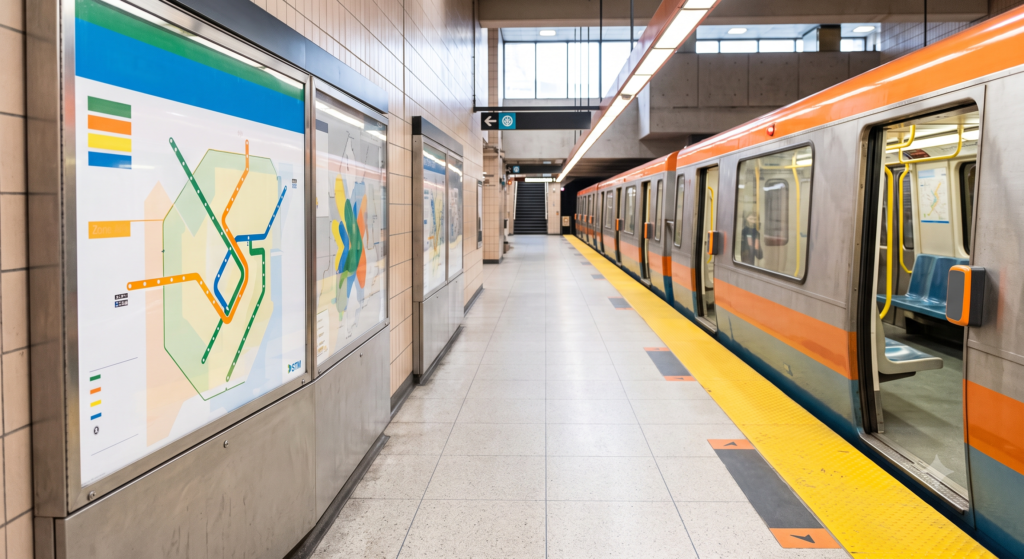
Montreal’s underground train network is clean, secure, and warm during cold winter days. Unlike typical subway systems running on steel tracks, Montreal trains roll on smooth rubber tires. As a result, you will notice a remarkably quiet glide and a classic rubber scent along station platforms.
The network features four distinct, color-coded lines serving 68 stations across the city:
- Green Line (Line 1): This line runs east to west through downtown directly beneath Rue Sainte-Catherine. You can take it to visit the Olympic Stadium, the Village, and the lively cafés of Verdun.
- Orange Line (Line 2): This broad U-shaped corridor serves key stops in Old Montreal, Little Italy, and the Plateau. In addition, it hosts Berri-UQAM, the main central transfer hub connecting three lines.
- Yellow Line (Line 4): A quick three-stop connector that leaves Berri-UQAM, dives beneath the St. Lawrence River, and reaches Parc Jean-Drapeau and Longueuil.
- Blue Line (Line 5): This line runs north of Mount Royal, moving riders between residential districts, the Université de Montréal campus, and Côte-des-Neiges.
Reading Station Signage
Wayfinding signs inside stations do not list directions by compass points like “North” or “South.” Instead, they show the name of the final stop on that route.
For instance, if you take the Green Line toward the west, follow signs marked Direction Angrignon. Conversely, if you travel east toward Hochelaga, look for signs showing Direction Honoré-Beaugrand.
Operating Hours and Train Frequency
Trains start running daily around 5:30 AM and shut down between 1:00 AM and 1:30 AM depending on the line and day of the week. During peak morning and evening rush hours, trains pull up every 2 to 4 minutes. Furthermore, trains arrive every 5 to 8 minutes during standard off-peak windows.
2. Using the Montreal Bus System
Where the underground tracks end, the bus fleet takes over. The STM operates over 200 routes that reach every corner of the island. Fortunately, simple route number bands tell you what type of service each bus provides:
- Local Routes (10 to 299): Regular neighborhood lines that make frequent street-corner stops.
- High-Frequency Lines (10 to 249 with green signs): Priority lines like the 24 Sherbrooke or the 55 Saint-Laurent that arrive every 10 to 12 minutes.
- Express Buses (400 to 499): Long-distance shuttles designed to bypass smaller stops and move commuters quickly during peak hours.
- Night Buses (300 to 399): Essential overnight routes that keep key city streets moving after the Métro closes at 1:00 AM.
- Shuttle Routes (700 to 799): Direct airport and tourist connections, including the popular 747 Express.
Riding and Etiquette Rules
Always step on through the front doors so you can tap your fare card at the scanner beside the driver. Meanwhile, exiting riders must use the rear doors to keep pedestrian traffic moving forward smoothly. When your stop approaches, pull the overhead yellow cord or hit a red stop button along the interior handrails.
3. Understanding Regional ARTM Transit Zones
The regional transit regulator, the Autorité régionale de transport métropolitain (ARTM), divides Greater Montreal into four distinct travel rings:
- Zone A: Covers the entire Island of Montreal (including Westmount, Dorval, and Montreal-Est).
- Zone B: Covers neighboring suburbs, specifically Laval to the north and Longueuil across the south shore.
- Zones C and D: Cover outer suburban rings and regional commuter train destinations.
Because all central attractions, museums, and historic sites sit inside Zone A, most visitors only ever need standard All Modes A (Tous modes A) tickets.
However, if you take the Yellow Line across to Longueuil or take the Orange Line north into Laval, your trip crosses into Zone B. Therefore, you will need to buy an All Modes AB ticket instead.
4. Ticket Options and Fare Prices
| Ticket Type (Zone A) | Current Price (CAD) | Best Use Case |
| 1-Trip (All Modes A) | $3.75 | Quick one-way trips |
| 2-Trip | $7.00 – $7.50 | Simple round-trip outings |
| 10-Trip | $33.00 – $34.25 | Multi-day visits or light weekly travel |
| Unlimited Evening (6 PM – 5 AM) | $6.50 | Nightlife, bar-hopping, and evening dining |
| 24-Hour Pass | $11.25 – $12.00 | Full sightseeing days (includes the 747 bus) |
| 3-Day Pass | $21.75 – $24.00 | Long weekend getaways |
| Unlimited Weekend (Fri 4 PM – Mon 5 AM) | $16.75 – $17.00 | Budget weekend explorers |
| Monthly Pass (Standard Adult) | ~$103.00 – $104.50 | Daily commuters living in Montreal |
(Tip: Children aged 11 and under ride for free when accompanied by a paying adult.)
The Two-Hour Transfer Window
Every single ticket includes an automatic 120-minute transfer window. Consequently, you can hop between trains and buses as much as needed during that two-hour frame. However, this transfer only applies to one continuous journey in a single direction; you cannot use it to complete a return trip on the same ticket.
5. How to Pay for Your Rides
Riders can choose between several easy payment methods across the network:
- The OPUS Card: This hard plastic smart card costs $6 CAD. You can load multiple fare products onto it simultaneously, such as weekly passes alongside 10-trip bundles. As a result, this card is the top choice for daily commuters, students, and frequent visitors.
- L’Occasionnelle Card: If you visit for only a few days, choose this disposable smart ticket. Station kiosks dispense these cards loaded with 1-day, 3-day, or multi-trip bundles.
- Contactless Taps: You can tap your credit card, smartphone, or smartwatch directly on readers at turnstiles and bus gates. Each tap registers as an individual single fare ($3.75). Therefore, if you plan to make four or more rides in a single day, an unlimited pass remains the cheaper choice.
6. Riding the 747 Bus from YUL Airport
The 747 Express Bus offers the most practical, budget-friendly transit link between Montréal-Trudeau International Airport (YUL) and the downtown core.
- Total Cost: The one-way ticket costs $11.25 CAD.
- Added Value: This ticket also functions as an unlimited 24-hour pass across all Zone A buses and trains.
- Operating Hours: The 747 runs 24 hours a day, 7 days a week.
- Where to Purchase: You can buy tickets at self-serve kiosks in the airport baggage claim area using debit or credit cards. Alternatively, you can pay exact cash in Canadian coins on board the bus (drivers cannot take paper bills or credit cards).
- Route Options: One branch runs directly to Lionel-Groulx station in roughly 30 minutes. Meanwhile, a second branch travels down Boulevard René-Lévesque toward Berri-UQAM station, stopping close to major downtown hotels along the way.
7. Helpful Local Tips for Smooth Trips
- Stand to the Right: Always stand on the right side of station escalators. This simple habit keeps the left side clear for walking commuters.
- Step Aside at Train Doors: Wait to the side of the platform doors when trains arrive. Always let departing passengers exit before you step inside.
- Keep Your Ticket Handy: Keep your paper card or fare receipt until you exit the station gates completely. Transit inspectors carry out routine checks inside corridors and bus lines.
- Track Buses with Real-Time Apps: Check accurate departure countdowns using the Transit App or the official ARTM Chrono app. Both tools display live vehicle tracking on clean street maps.
- Use the Underground City (RÉSO): Downtown stations connect directly to over 30 kilometers of pedestrian pathways under street level. This massive climate-controlled web links office towers, shopping malls, and food courts, making it easy to travel across downtown without braving winter cold.