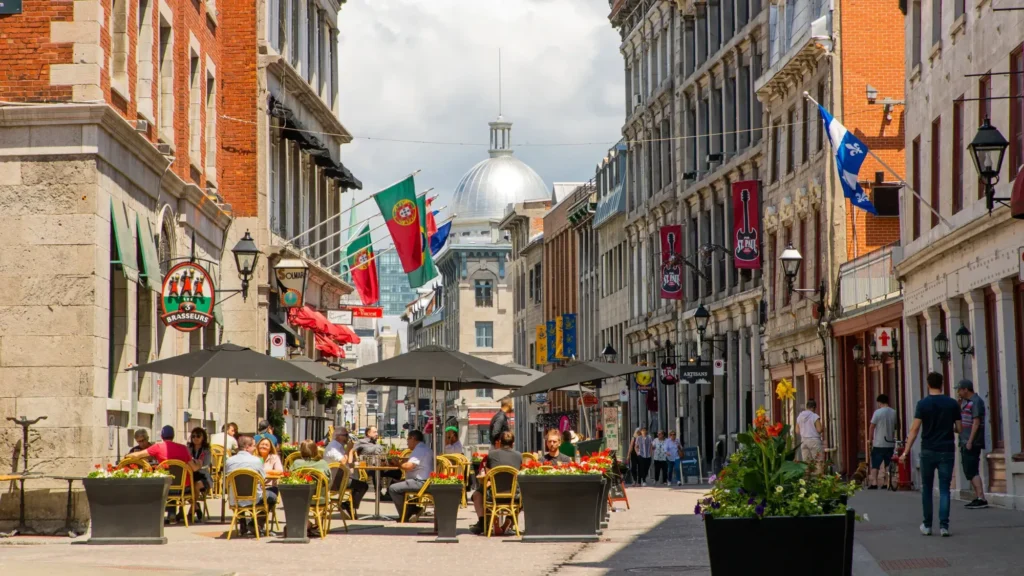
Montreal is one of Canada’s most dynamic business hubs, and for good reason. Situated in Quebec, this vibrant city has long been a commercial powerhouse, not just for the province but for the entire country. With its unique position as a bilingual metropolis that bridges North American and European markets, Montreal offers something special that few cities can match.
What makes Montreal stand out isn’t just its location—though that certainly helps. It’s the combination of a highly skilled, multilingual workforce, a thriving innovation ecosystem, and a quality of life that makes people actually want to live and work here. From aerospace giants to cutting-edge AI startups, the city has proven it can compete on the global stage while maintaining its distinct character and affordability compared to other major North American cities.
For entrepreneurs, investors, and corporations looking for their next move, Montreal presents a compelling case. It’s a city where established industries coexist with emerging technologies, where business costs remain competitive, and where government support for innovation is more than just talk. Whether you’re a startup founder seeking funding and talent, or a multinational looking to establish a North American presence, Montreal deserves serious consideration.
Overview of Montreal’s Economy
Economic Significance
Montreal isn’t just big for Quebec—it’s a major economic engine for all of Canada. The city’s metropolitan area generates a substantial portion of Quebec’s GDP, and its economic influence extends far beyond provincial borders. As Quebec’s undisputed commercial center, Montreal hosts the headquarters of major Canadian corporations and serves as a key link in North American trade networks.
The city’s economy has shown remarkable resilience and adaptability over the decades. While it faced challenges during the late 20th century as some businesses relocated to Toronto, Montreal has since reinvented itself. Today, it’s not trying to be another Toronto or New York—it’s carved out its own identity as a center for innovation, creativity, and international commerce. This economic transformation has positioned Montreal as a city where traditional manufacturing meets modern technology, creating unique opportunities for businesses across multiple sectors.
Key Economic Drivers
What’s particularly interesting about Montreal’s economy is its diversity. This isn’t a one-industry town that rises and falls with a single sector. Instead, you’ll find a balanced mix of industries that creates economic stability while still leaving room for growth and innovation.
Traditional industries like aerospace and manufacturing remain strong pillars of the economy, employing thousands of workers and contributing billions to the regional economy. But Montreal has also successfully transitioned into the digital age, becoming a recognized leader in artificial intelligence, video game development, and creative industries. This balance between old and new, traditional and innovative, gives Montreal an economic foundation that’s both stable and forward-looking. When one sector faces headwinds, others often pick up the slack, creating a more resilient business environment overall.
Strategic Advantages of Doing Business in Montreal
Geographic Location
Location matters in business, and Montreal’s geography is a major asset. The city sits at a natural crossroads, with excellent access to both American and European markets. It’s closer to Europe than any other major North American business center, which matters for companies with transatlantic operations. At the same time, it’s well-connected to major U.S. markets, with highways, rail lines, and air routes linking it to cities throughout the eastern United States.
The Port of Montreal is one of the largest inland ports in the world and serves as a crucial hub for international trade. Modern airport facilities at Pierre Elliott Trudeau International connect Montreal to destinations across North America, Europe, and beyond. The city’s rail infrastructure is equally impressive, with connections to major freight networks that move goods efficiently across the continent. For businesses that need to move products or coordinate operations across regions, Montreal’s transportation infrastructure is a real advantage, not just marketing hype.
Skilled and Bilingual Workforce
Talk to any business leader in Montreal, and they’ll tell you the same thing: the talent here is exceptional. The city benefits from several world-class universities, including McGill, Concordia, and Université de Montréal, which together produce thousands of graduates every year in fields ranging from engineering to business to the arts.
But it’s not just about quantity—it’s about the unique qualities of Montreal’s workforce. The bilingual nature of the city means many workers are fluent in both French and English, which is invaluable for companies operating in North American and European markets. Beyond just language skills, Montreal workers often bring a multicultural perspective that helps businesses navigate different markets and customer bases. The city also attracts international talent drawn by Montreal’s quality of life and relatively accessible immigration pathways for skilled workers.
Competitive Business Costs
Here’s where Montreal really shines for businesses watching their bottom line. Commercial real estate in Montreal costs significantly less than comparable space in Toronto or major U.S. cities like New York or San Francisco. We’re not talking about small differences—businesses can often save 30% to 50% on office space compared to these other major markets.
Labor costs are also more competitive. While Montreal pays professionals well, salaries are generally lower than in other major North American tech hubs, which helps businesses stretch their budgets further. Utility costs and other operating expenses tend to be reasonable as well, thanks in part to Quebec’s abundant hydroelectric power. For startups and growing companies where every dollar matters, or for established corporations looking to improve their margins, Montreal’s cost structure is a significant advantage.
Quality of Life
Business advantages matter, but let’s be honest—people also care about where they’re going to live. Montreal consistently ranks as one of the world’s most livable cities, and it’s easy to see why. The city offers a European feel with North American convenience, featuring world-class restaurants, festivals, arts, and culture.
Housing is actually affordable compared to Toronto or Vancouver, meaning employees can enjoy a good quality of life without breaking the bank. The city’s neighborhoods are walkable, public transit is reliable, and there’s a genuine sense of community in different areas across the island. For companies trying to attract and retain top talent, being located in a city where people actually want to live—not just work—is a huge advantage. Employees who enjoy where they live are more likely to stick around, reducing turnover costs and building stronger teams over time.
Major Industries in Montreal
Technology and Artificial Intelligence
Montreal has become a global leader in artificial intelligence research and development. This isn’t accidental—it’s the result of decades of academic research, particularly at institutions like Université de Montréal and McGill, combined with strategic government investment and the presence of visionary researchers like Yoshua Bengio, one of the fathers of deep learning.
Today, Montreal is home to major AI research labs operated by companies like Google, Microsoft, and Facebook, alongside a thriving ecosystem of AI startups. Organizations like Mila, the Quebec Artificial Intelligence Institute, attract researchers from around the world. The city has also developed a broader tech ecosystem beyond AI, with successful startups in fintech, e-commerce, and software as a service. Government support through programs and tax incentives has helped fuel this growth, but at its core, Montreal’s tech success comes from having the right combination of academic excellence, entrepreneurial spirit, and collaborative culture.
Aerospace
Aerospace is the industry that put Montreal on the map as an industrial powerhouse, and it remains a cornerstone of the local economy. The city is home to major players like Bombardier, Pratt & Whitney Canada, and Bell Textron, along with hundreds of suppliers and specialized manufacturers that support the industry.
Montreal’s aerospace cluster is one of the largest in the world, encompassing everything from aircraft design and manufacturing to maintenance and training. The industry employs tens of thousands of highly skilled workers and generates billions in annual revenue. What makes Montreal particularly attractive for aerospace companies is the concentration of expertise—when you have so many companies and specialists in one place, collaboration and innovation happen naturally. The presence of research institutions and training centers means companies have access to cutting-edge research and a steady pipeline of qualified workers.
Life Sciences and Biotechnology
Montreal’s life sciences sector is another area where the city has built genuine expertise and critical mass. The city hosts major pharmaceutical companies, biotech startups, and world-renowned research institutions focused on everything from drug discovery to medical devices to personalized medicine.
Research hospitals and universities in Montreal are conducting groundbreaking work in areas like cancer research, neuroscience, and rare diseases. This academic research often spins off into commercial ventures, creating a pipeline of innovation from lab to market. The Quebec government has also made life sciences a priority, offering tax credits and grants to companies conducting research and development. For pharmaceutical and biotech companies, Montreal offers a supportive environment with access to clinical trial participants, research partnerships, and regulatory expertise.
Video Game and Creative Industries
Gaming is serious business in Montreal, and the city has become one of the world’s leading centers for video game development. Major studios like Ubisoft Montreal have made the city their home, producing blockbuster franchises and employing thousands of designers, programmers, and artists.
What started with a few studios has grown into a full ecosystem, with smaller independent developers, support services, and specialized schools training the next generation of game developers. The creative industries extend beyond gaming to include film production, visual effects, animation, and digital media. Montreal’s bilingual workforce is particularly valuable in this sector, as content often needs to be produced for both English and French-speaking markets. Government tax credits for digital media production have certainly helped attract companies, but the real draw is the talent and creative culture that’s developed in the city.
Finance and Fintech
Montreal has a long history as a financial center, with major Canadian banks maintaining significant operations in the city. The Montreal Exchange, Canada’s derivatives exchange, is based here. Traditional banking and insurance companies employ thousands and provide stability to the financial sector.
More recently, Montreal has seen growth in fintech startups that are using technology to disrupt traditional financial services. Companies working on everything from payment processing to wealth management to blockchain technology are finding Montreal to be a good base of operations. The combination of traditional financial expertise, tech talent from the broader innovation ecosystem, and supportive regulation creates opportunities for companies that want to bridge the gap between old-school finance and new technology.
Starting a Business in Montreal
Choosing a Business Structure
If you’re thinking about starting a business in Montreal, one of your first decisions is choosing the right legal structure. The main options are sole proprietorship, partnership, or incorporation. Each has its pros and cons, and the right choice depends on your specific situation.
A sole proprietorship is the simplest option—you and the business are legally the same entity. It’s easy to set up and maintain, but you’re personally liable for any business debts or legal issues. Partnerships work similarly but involve two or more people sharing ownership and liability. Incorporation creates a separate legal entity, which provides liability protection and can offer tax advantages, but it comes with more administrative requirements and costs. Many entrepreneurs start as sole proprietors and incorporate later as their business grows and the benefits of incorporation outweigh the additional complexity.
When incorporating, you also need to decide between provincial and federal incorporation. Provincial incorporation in Quebec is usually sufficient for businesses operating primarily within Quebec, while federal incorporation can make sense if you plan to operate across multiple provinces or want better name protection nationally.
Registration and Legal Requirements
Registering a business in Quebec involves several steps, and it’s important to do things properly from the start. You’ll need to register with the Quebec Enterprise Register, which is the central repository for business information in the province. The registration process requires you to provide information about your business structure, ownership, and activities.
One thing that catches some people off guard is Quebec’s language laws. Bill 101 requires businesses to operate in French, and companies with 50 or more employees have additional obligations. Even smaller businesses need to ensure their signage, customer communications, and workplace materials comply with French language requirements. This doesn’t mean you can’t use English—Montreal is a bilingual city—but French must be predominant in most contexts. You’ll also need to obtain any necessary permits or licenses specific to your industry, which can vary widely depending on what type of business you’re operating.
Taxes and Incentives
Understanding the tax landscape is crucial for any business in Montreal. Companies face both federal and provincial corporate taxes, but the overall rates are competitive with other major business centers. What really makes a difference are the various tax credits and incentives available, particularly for companies involved in research and development, innovation, or digital media production.
Quebec’s R&D tax credit system is among the most generous in North America, and companies in sectors like technology, life sciences, and advanced manufacturing can significantly reduce their tax burden through these programs. There are also tax credits specifically for multimedia production and other creative industries. Beyond tax incentives, grants and funding programs are available through various government agencies at the provincial and federal levels. The key is understanding what’s available and ensuring your business meets the requirements—many companies work with accountants or consultants who specialize in maximizing these opportunities.
Government Support and Business Resources
Economic Development Agencies
Montreal and Quebec offer substantial support for businesses through various economic development agencies. Montreal International helps foreign companies establish operations in the city, providing guidance on everything from site selection to recruitment. Investissement Québec offers financing and support programs for companies looking to expand or establish themselves in the province.
For startups and early-stage companies, there’s a robust ecosystem of incubators and accelerators. Organizations like District 3, FounderFuel, and Real Ventures provide mentorship, funding, and connections that can be invaluable for new companies trying to gain traction. These programs often focus on specific sectors, so it’s worth researching which ones align with your business model and industry.
Networking and Business Organizations
Building relationships is crucial in business, and Montreal has active chambers of commerce, industry associations, and networking groups that can help. The Board of Trade of Metropolitan Montreal is one of the largest in North America and provides networking opportunities, advocacy, and business services. Industry-specific associations exist for sectors like aerospace, technology, life sciences, and many others.
What’s particularly valuable about Montreal’s business community is that it’s large enough to offer real opportunities for connections and collaboration, but small enough that it’s not impossibly difficult to meet the right people. Many entrepreneurs and executives in Montreal are genuinely willing to help newcomers and share advice, creating a more collaborative atmosphere than you might find in some larger business centers.
Challenges of Doing Business in Montreal
Language Regulations
Let’s address the elephant in the room: Quebec’s French language laws can be challenging for businesses, particularly those coming from outside the province. Bill 101 and subsequent amendments require French to be the predominant language in the workplace and in communications with customers. For companies used to operating primarily in English, this requires adjustment and sometimes additional costs for translation and compliance.
That said, many businesses successfully navigate these requirements, and Montreal’s bilingual reality means most companies can and do operate in both languages. The key is understanding the rules upfront and building compliance into your operations from the beginning, rather than treating it as an afterthought. Many local service providers can help with translation and compliance, making the process more manageable.
Regulatory Differences
Operating in Quebec means dealing with provincial regulations that sometimes differ from the rest of Canada. Labor laws, tax rules, and various business regulations can be Quebec-specific, which means you can’t always assume that what works in other provinces will work here. This isn’t necessarily a bad thing—Quebec’s regulations often reflect specific priorities and values—but it does mean businesses need to do their homework and potentially work with advisors who understand the local regulatory environment.
Seasonal Economic Considerations
Montreal’s climate is something to consider, particularly for businesses in sectors like construction, transportation, or retail that can be affected by weather. Winters are cold and snowy, which can impact everything from construction schedules to consumer behavior. Some businesses experience significant seasonal fluctuations that need to be factored into financial planning and operations.
On the flip side, Montreal’s distinct seasons create opportunities in sectors like tourism, festivals, and seasonal retail. The key is understanding these patterns and planning accordingly rather than being caught off guard by them.
Future Outlook for Montreal Business
Looking ahead, Montreal is well-positioned for continued economic growth and innovation. The city’s investments in artificial intelligence are paying off, with Montreal now recognized globally as an AI hub. This expertise is starting to cross-pollinate into other sectors, with AI applications emerging in healthcare, finance, manufacturing, and beyond.
Green technology and sustainability are also emerging as significant opportunities. Quebec’s abundant renewable energy and Montreal’s research capabilities in areas like electric transportation and clean tech create a foundation for growth in these sectors. The city is attracting increased international investment, particularly from European and Asian companies looking for a North American base that offers something different from traditional U.S. tech hubs.
Emerging industries to watch include quantum computing, where Montreal has developing expertise, and advanced manufacturing techniques that blend traditional industrial know-how with digital technologies. The life sciences sector continues to grow, with increasing focus on personalized medicine and biotechnology. Long-term economic projections for Montreal are generally positive, assuming the city continues to invest in education, innovation, and infrastructure while maintaining the quality of life and affordability that make it attractive to talent.
Challenges remain—workforce shortages in some sectors, infrastructure needs, and the ongoing need to balance economic growth with other priorities. But compared to many major cities, Montreal has a solid foundation and clear momentum in the right direction.
Conclusion
Montreal offers a compelling package for businesses: a strategic location, skilled workforce, competitive costs, and quality of life that attracts and retains talent. The city has successfully transformed itself from a traditional manufacturing center into a hub for innovation and technology, while still maintaining its strengths in established industries like aerospace and life sciences.
Yes, there are challenges—language regulations, regulatory differences, and seasonal considerations among them. But for businesses willing to navigate these issues, Montreal provides opportunities that are increasingly hard to find in other major North American business centers. The combination of affordable real estate, available talent, government support, and genuine innovation ecosystems creates conditions where businesses can grow without the astronomical costs found in places like San Francisco or New York.
Whether you’re an entrepreneur with an innovative idea, an investor seeking opportunities in emerging technologies, or an established corporation looking to expand or establish new operations, Montreal deserves serious consideration. The city has the infrastructure, the talent, the support systems, and the forward momentum to help businesses succeed. It’s not perfect—no city is—but for many companies, Montreal’s unique combination of advantages makes it exactly the right place to be.