Quick answer: A Montréal winter car check goes beyond installing winter tires. Test the battery and charging system, inspect wipers and lights, use winter-rated washer fluid, check brakes and heating, clear snow from the vehicle, and carry an emergency kit. Address faults before the first severe cold snap and consult a qualified mechanic for anything you cannot inspect safely.
Québec requires winter tires on many vehicles during the prescribed season, but tires alone cannot fix poor visibility, a weak battery or a frozen washer system. The province’s winter vehicle preparation guide is a useful official checklist. Our separate winter tire deadline guide covers the tire requirement; this article focuses on the rest of the vehicle.
Check the battery before cold weather exposes a weakness
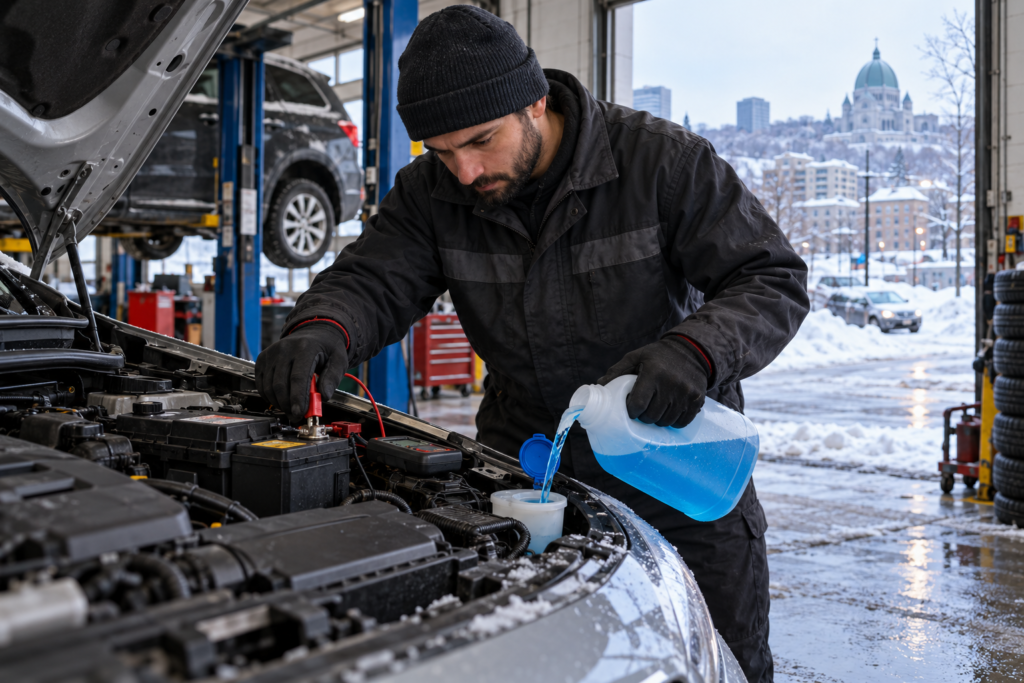
Low temperatures can make starting more difficult, especially when a battery is already weak. If cranking is slow, the battery warning light appears, or the battery is older and has given trouble, request a professional battery and charging-system test. Cleaning visible corrosion or tightening connections may be part of maintenance, but follow the vehicle manual and use a qualified technician when unsure.
Do not assume a jump start resolves the underlying problem. Repeated failures can point to battery age, a charging fault or another electrical issue. Keep a compatible booster or cables only if you know how to use them safely. Some vehicles, including hybrids and electric vehicles, have different procedures; consult the owner’s manual.
Give visibility its own checklist
Replace worn wiper blades that streak or skip, and fill the reservoir with windshield washer fluid suitable for freezing conditions. Test the washer jets before a storm. Inspect the defroster and rear-window heater so you can clear fog and ice. Clean headlamps, tail lamps and cameras; road grime can reduce visibility quickly.
Before driving, remove snow and ice from windows, mirrors, lights and the roof. Do not rely on a narrow cleared strip of windshield. Keep a snow brush and scraper within reach, and give yourself extra time so you can clear the car completely. The official provincial vehicle preparation guidance includes related checks.
| System | What to inspect | When to seek help |
|---|---|---|
| Battery | Starting strength, terminals, charging | Slow cranking or warning light |
| Visibility | Wipers, washer fluid, defroster, lights | Persistent streaking or failed heater |
| Brakes | Pedal feel, noise, warning lights | Any unusual performance |
| Fluids | Levels and manufacturer specifications | Leaks or repeated low levels |
| Emergency gear | Brush, shovel, blanket, light, contacts | Replace missing or expired supplies |
Inspect brakes, fluids and heating
Winter roads make a marginal brake problem more serious. Have unusual noises, vibration, pulling or warning lights diagnosed promptly. Ask for a brake inspection during routine seasonal service if the vehicle is due. Check fluid levels according to the owner’s manual and have leaks investigated rather than repeatedly topping up an unknown loss.
Ensure the cabin heater, ventilation and defroster work. A reliable heater supports comfort and window clearing, but a cold cabin can also signal a mechanical problem. Avoid opening hot coolant components yourself. If an electric vehicle is part of your household, review its winter range and charging recommendations from the manufacturer; cold weather can change energy use.
Keep a vehicle emergency kit
Québec advises drivers to carry winter supplies such as a brush, scraper, shovel and emergency kit. Add warm clothing, a blanket, flashlight, phone charging option, water and appropriate non-perishable snacks. Adapt the kit for children, passengers and longer trips. Store items so they cannot become loose projectiles in a sudden stop.
Before leaving Montréal for a longer drive, check the weather and Québec 511 for road conditions. Tell someone your route and expected arrival when travelling in severe weather. If conditions are unsafe, delay the journey. If stranded, follow official safety advice, especially about keeping the exhaust outlet clear and deciding whether to remain with the vehicle.
Plan a simple seasonal service appointment
Ask a trusted shop to check the battery, lights, wipers, fluids, brakes and any fault codes at the same appointment as tire service if practical. Request an itemized estimate before extra work begins. Keep maintenance records and note when a problem first occurred. A service reminder is a prompt to inspect; it is not proof that every component needs replacement.
Compare winter readiness with your actual driving pattern. A short city commute still requires clear windows and working lights. Frequent highway driving makes route planning and an emergency kit especially important. If your car is rarely driven, check the battery and tire condition anyway; low use does not prevent deterioration.
Frequently asked questions
What should I check besides winter tires?
Focus on the battery, wipers, washer fluid, lights, brakes, heater and emergency kit. Consult the vehicle manual for model-specific requirements.
Can winter washer fluid freeze?
Fluid can freeze if it is unsuitable for the expected temperature or diluted. Choose a product rated for local conditions and follow its label.
Should I replace a battery before it fails?
Get it tested if it is aging or showing symptoms. A professional can assess its condition and charging system rather than replacing it on age alone.
Where can I check road conditions outside Montréal?
Québec 511 provides current road information. Check it before travel and adapt the trip to weather warnings and visibility.
A brief inspection now can prevent a difficult cold-weather breakdown later. Use the official Québec guidance and the manufacturer’s manual as your final reference.
Check the vehicle after repeated freeze-thaw cycles
Winter maintenance is not finished after the first appointment. Slush and road salt can build up around lamps, sensors and licence plates. Inspect visibility before each trip and clean the car safely. After a period of freezing rain, check that doors, wipers and the charging or fuel access point operate normally; do not force frozen components. Watch for new warning lights or a change in braking and arrange service if needed.
Keep an eye on tire pressure according to the vehicle’s instructions, since temperature changes can affect readings. Inspect the spare tire or repair kit if your vehicle has one. If you rarely use the car, periodically confirm that it starts and that the kit remains dry and complete. Build this quick check into your routine before a long trip rather than discovering a problem when already on the road.