Preparing your Montreal home for winter requires a structured, multi-phase approach starting as early as September. Focus on sealing exterior penetrations, servicing your heating system, protecting your plumbing from freezing temperatures, clearing your roof and gutters of debris, and assembling emergency supplies according to official municipal guidelines.
The Montreal Winter Reality Check: Understanding Local Climate Challenges
Winter in Montreal is unforgiving. Homeowners face prolonged periods of sub-zero temperatures, heavy snow accumulation, ice storms, and rapid freeze-thaw cycles. These extreme meteorological patterns place immense stress on building envelopes, roofing assemblies, plumbing infrastructure, and heating systems. Understanding the unique climatic forces at play in southern Quebec is the first step toward effective property management. Unlike regions with milder maritime climates, Montreal experiences deep winter freezes where temperatures routinely drop below -20°C for days or weeks at a time. This sustained cold causes materials to contract significantly. When moisture trapped inside masonry, wood joints, or concrete foundations freezes, it expands with tremendous force, leading to spalling, cracking, and structural degradation. Furthermore, the city’s notorious freeze-thaw cycles—where daytime temperatures rise just above freezing to melt snow, followed by rapid nighttime plunges—create ice dams on roofs and force water deep into vulnerable envelope seams. To combat these forces, your preparation strategy cannot be reactive. Waiting until the first major snowfall or the initial deep freeze to inspect your property is a recipe for costly emergency repairs. A systematic, chronologically organized checklist ensures that every vulnerable system, from your foundation perimeter to your attic ventilation, is fully fortified before winter sets in for good. Beyond the physical stress on building materials, Montreal winters test the mechanical resilience of your home. Heating systems must run continuously under heavy loads, electrical systems handle increased indoor activity and lighting demands, and plumbing networks endure extreme temperature differentials between indoor living spaces and exterior-facing walls. Understanding these interconnected vulnerabilities allows you to prioritize maintenance tasks logically. For instance, sealing air leaks in your upper floors not only lowers your monthly heating bill but also prevents warm air from bleeding into your attic, which is the primary catalyst for destructive ice dam formation. By taking a holistic view of your property as an integrated thermal system, you can protect your investment against the harshest elements Quebec winters can muster.
Phase 1: Exterior Building Envelope and Foundation Protection
Your home’s exterior envelope serves as the primary barrier against driving wind, freezing rain, and accumulating snowdrifts. Protecting this barrier starts from the ground up, moving systematically from your foundation walls to your roofline.
Foundation Inspection and Waterproofing
Begin your exterior assessment at the foundation level. Walk the perimeter of your Montreal property and inspect concrete foundation walls for hairline cracks, settling fissures, or areas where parging is crumbling. Record any cracks and consult a qualified professional if they widen, admit water, or may be structural. For wider structural cracks or active water infiltration points, professional injection may be required. Check that surface water drains away from the foundation; ask a qualified contractor about grading concerns. Negative grading directs melting snow and autumn rain straight toward your basement walls, increasing hydrostatic pressure and the risk of foundation seepage or structural freezing. Clean out window wells, clear away accumulated leaves and organic debris, and verify that window well covers are securely installed to prevent snow and ice buildup against basement windows. When evaluating your foundation, pay special attention to the junction where the concrete foundation meets the wood framing or masonry of your main floor—known as the rim joist. Cold air leaking into this area can freeze floor joists and subflooring. Sealing and insulating the rim joist from the interior with closed-cell spray foam or rigid foam board creates an airtight thermal break that stops cold drafts before they enter your living spaces.
Siding, Masonry, and Exterior Wall Sealing
Next, evaluate your siding or exterior masonry. For brick and stone homes—common across many Montreal neighborhoods like the Plateau, Notre-Dame-de-Grâce, and the South Shore—inspect mortar joints for crumbling or missing mortar, a condition known as tuckpointing failure. Water penetrating deteriorated mortar joints will freeze and expand during winter, popping bricks loose and causing extensive structural damage. If you have wood or vinyl siding, check for loose panels, rotted trim boards, or gaps around utility penetrations. Every gap, hole, or crack where electrical cables, gas lines, dryer vents, or plumbing pipes enter the home must be meticulously sealed. Ask a qualified contractor which sealant and fire-safety treatment are appropriate for each penetration. Sealing these gaps not only prevents moisture infiltration but also stops mice, rats, and squirrels from seeking refuge in your warm walls as outdoor temperatures plummet.
Phase 2: Roof, Gutters, and Drainage Systems
The roof is your home’s frontline defender against Montreal’s heavy winter snow loads and ice accumulation. Neglected roof problems can increase the risk of leaks and damage.
Gutter Cleaning and Downspout Extension
Once autumn leaves have finished falling—typically by late November—clean all gutters and downspouts thoroughly. Clogged gutters trap melting snow and autumn rain, forming heavy blockages that overflow against your fascia boards and trickle down your exterior walls. Ensure that gutter slopes are properly aligned toward downspouts and that all hangers are secure enough to support the heavy weight of wet snow and ice. Direct downspout discharge safely away from the foundation in a way that suits the property and local rules. In Montreal, water discharged directly beside a foundation wall during winter thaws will immediately pool and refreeze against the concrete, exacerbating hydrostatic pressure and causing severe basement moisture issues. Consider installing splash blocks or flexible underground drain extensions that route water well away from your property footprint. In addition to standard maintenance, consider installing aluminum gutter guards if your property is surrounded by mature trees. While gutter guards do not eliminate the need for an annual inspection, they significantly reduce the accumulation of twigs and leaves that clog downspouts during autumn downpours. Make sure downspout elbows and splash blocks are securely fastened so that high winds or sliding snow packs do not dislodge them during winter storms.
Roof Inspections and Ice Dam Prevention
Inspect your roof shingles for curling, cracking, granule loss, or missing tabs. If you notice compromised shingles, arrange a qualified roof inspection and repair. Pay close attention to flashing around chimneys, plumbing vent stacks, skylights, and roof valleys, as these are the primary points where winter meltwater finds its way into your attic. Ice dams are a major hazard in Montreal. They occur when heat escapes from a poorly insulated attic, warming the roof deck and melting the bottom layer of accumulated snow. This meltwater runs down the roof until it reaches the cold eaves (the overhang), where it refreezes, creating a solid ridge of ice. Subsequent meltwater backs up behind this ice dam, forcing water underneath the shingles and directly into your home. Preventing ice dams requires a two-pronged approach: * **Attic Insulation:** Have insulation levels assessed against current requirements and your home’s design; avoid assuming a single R-value fits every property. * **Attic Ventilation:** Verify that soffit vents and roof ridge or gable vents are completely unblocked by insulation, allowing ambient outdoor air to circulate through the attic and keep the roof deck cold. To achieve this, inspect your attic space from the interior before the snow flies. Look for dark staining on the underside of the roof sheathing, which indicates past leaks or condensation buildup. Check that bathroom exhaust fans, kitchen range hoods, and dryer vents terminate outdoors rather than venting into the attic space. Introducing humid indoor air directly into a cold attic is one of the leading causes of frost accumulation, which melts during warm spells and mimics roof leaks.
Phase 3: Heating, Ventilation, and Air Conditioning (HVAC) Maintenance
When the mercury plummets into negative double digits, your heating system works overtime. Ensuring your furnace, boiler, or heat pump is operating at peak efficiency is essential for both home comfort and safety.
Furnace and Boiler Servicing
Schedule a professional HVAC technician to service your heating system annually, ideally before the heavy heating season begins. For forced-air gas or electric furnaces, the technician should inspect the heat exchanger for cracks (which can leak dangerous carbon monoxide), clean the burners, test safety controls, and check blower motor amperage. If you heat your Montreal home with a hot water boiler, check the system pressure, bleed air from radiators to ensure even heat distribution, and inspect circulating pumps for leaks or unusual noise. Replace your forced-air furnace filters every one to three months throughout the winter. A clogged, dust-laden filter restricts airflow, forces your system to work harder, drives up your electricity or natural gas bills, and can cause the furnace to overheat and shut down prematurely. For homeowners utilizing heat pumps—which are increasingly popular in Quebec for their energy efficiency—ensure the outdoor compressor unit is elevated above typical snow accumulation levels on a sturdy wall bracket or concrete pad. Clear away surrounding brush and leaves, and install a protective snow hood over the unit to shield it from falling ice and heavy snowdrifts while allowing unrestricted airflow for defrost cycles.
Chimney and Fireplace Preparation
If your home features a wood-burning fireplace or a masonry chimney, professional inspection and sweeping may be needed according to use, equipment and applicable requirements Creosote—a highly flammable byproduct of wood combustion—accumulates inside the flue over time and can ignite, causing devastating chimney fires. Ensure your chimney cap is intact and fitted with a sturdy mesh screen to prevent squirrels, raccoons, and birds from nesting in the flue during the off-season. Check the damper to ensure it seals tightly when closed, preventing precious indoor heat from escaping up the chimney stack when the fireplace is not in use. For homeowners considering larger structural upgrades or energy-efficiency retrofits to optimize their heating systems, exploring property renovation planning can provide valuable guidance on budgeting and contractor selection.
Phase 4: Plumbing Protection and Freeze Prevention
Frozen pipes are among the most destructive and expensive winter emergencies a Montreal homeowner can face. When water freezes inside a pipe, it expands by approximately 9%, generating tremendous hydraulic pressure that can split copper, PVC, or iron pipes and flood your living space when the ice thaws.
Outdoor Spigot Shutdown and Winterization
Outdoor hose bibbs (spigots) must be winterized before the first deep freeze. Follow this step-by-step procedure: 1. Locate the interior shut-off valve that supplies water to each outdoor spigot and turn it to the closed position. 2. Go outside and disconnect all garden hoses, drain any remaining water from them, and coil them for indoor storage. 3. Open the outdoor spigot completely and leave it open for the duration of the winter. This allows any trapped water remaining in the pipe between the interior shut-off valve and the outdoor spigot to drain out and gives any residual ice room to expand without bursting the pipe. 4. Inside the basement or crawlspace, open the bleeder cap on the interior shut-off valve (if equipped) to drain remaining water into a small bucket. 5. Insulate the interior pipe leading to the spigot with foam pipe sleeves. It is also wise to check for hidden outdoor water sources, such as irrigation systems or exterior freestanding water features. Drain all backflow preventers, blow out underground sprinkler lines with compressed air if necessary, and store all submersible pumps indoors to prevent freeze damage.
Insulating Vulnerable Indoor Pipes
Inspect your basement, crawlspace, garage, and exterior-facing walls for uninsulated water supply lines. Pipes running through exterior walls, unheated crawlspaces, or near poorly sealed rim joists are at extreme risk of freezing during Montreal’s coldest polar vortex events. Wrap these pipes in foam insulation sleeves or self-sealing fiberglass wrap. In particularly vulnerable areas, consider applying thermostatically controlled heat tape around supply lines. If you plan to travel during the winter months, never turn your heating system off. Set your thermostat to a minimum of 15°C (59°F), ask a trusted neighbor or relative to check your home daily, and consider shutting off the main water supply and draining the plumbing system if you will be away for an extended period. Furthermore, during extreme cold warnings issued by Environment Canada for Montreal, let a trickle of water run from faucets connected to vulnerable exterior walls. Moving water is significantly harder to freeze, which can prevent catastrophic pipe bursts during record-low night temperatures.
Phase 5: Indoor Winterization, Energy Efficiency, and Safety Checks
While exterior and structural preparations are vital, optimizing your indoor environment protects your health, reduces energy consumption, and ensures life-safety systems function reliably.
Draft Proofing and Weatherstripping
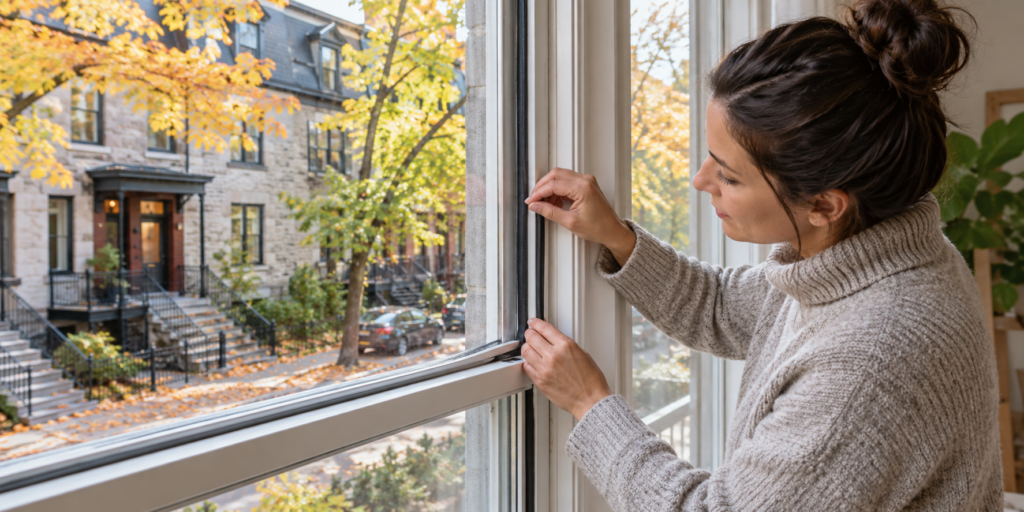
Montreal winters put heating budgets to the test. Eliminating cold drafts around doors and windows significantly improves indoor thermal comfort and lowers heating bills. Inspect the weatherstripping around all exterior doors and operable windows. If the rubber, vinyl, or felt stripping is compressed, torn, or brittle, replace it entirely. Apply clear plastic window insulation film over older, drafty single-pane or double-pane windows to create an insulating dead-air barrier. Check the threshold seals at the bottom of your exterior doors; install door sweeps if you can see daylight beneath the door slab. For electrical outlets and wall switches located on exterior walls, install foam outlet gaskets behind the cover plates to stop cold air from infiltrating through wall cavities. Ceiling fans can also be reversed to spin clockwise at low speed during winter, creating an updraft that gently pushes warm air pooling near the ceiling down into the living zone, enhancing overall heating efficiency.
Life-Safety Device Testing
Short winter days and tightly sealed homes increase the risk of indoor air quality issues and fire hazards. Before turning on your heating system, test every smoke detector and carbon monoxide (CO) detector in your home by pressing the test button. Replace all batteries with fresh lithium or alkaline batteries. Quebec regulations and municipal bylaws require working smoke alarms on every level of the home and outside every sleeping area; carbon monoxide detectors are mandatory in homes with fuel-burning appliances or attached garages.
In addition to smoke and carbon monoxide alarms, inspect household fire extinguishers. Ensure they are fully charged, easily accessible in high-risk areas like the kitchen and garage, and that all family members know how to operate them using the PASS method (Pull, Aim, Squeeze, Sweep).
Phase 6: Emergency Preparedness and Winter Storm Readiness
Even with meticulous home preparation, severe winter storms, heavy ice buildup, and high winds can cause widespread power outages across Montreal. Preparing for extreme weather events is an essential component of responsible homeownership. Consult official government safety resources for comprehensive guidelines on assembling emergency kits and managing utility failures. Review the official instructions provided by the provincial government on how to prepare for extreme winter conditions. Your household emergency kit should be stored in an accessible, designated location and stocked with enough supplies to sustain all family members and pets for a minimum of 72 hours without municipal services. Essential items include: * Bottled drinking water (at least 4 liters per person per day) * Non-perishable food items that require no cooking or refrigeration, along with a manual can opener * A battery-powered or hand-crank radio with extra batteries * High-output LED flashlights, headlamps, and spare batteries * A fully stocked first-aid kit and essential personal prescription medications * Extra warm blankets, wool sleeping bags, and winter clothing layers * A portable power bank for charging mobile communication devices * A whistle, multi-tool, and duct tape Furthermore, plan for alternative heating and lighting strategies in case of an extended blackout. Never use charcoal grills, propane camp stoves, or gas generators indoors or inside enclosed garages, as they produce lethal levels of carbon monoxide. Ensure your generator is placed outdoors at least 20 feet away from windows and doors, and equipped with a heavy-duty transfer switch installed by a licensed electrician if tied into your home’s main electrical panel.
Comprehensive Winter Preparation Timeline Checklist
To help you manage tasks efficiently, use this chronological checklist to track your seasonal home maintenance milestones.
Frequently Asked Questions
When is the best time to start preparing my Montreal home for winter?
The ideal time to begin winter preparation is in September, while outdoor temperatures remain mild. Starting early allows you to complete masonry repairs, seal exterior penetrations, and service your heating system before contractors become fully booked and weather conditions deteriorate.
How can I prevent ice dams on my Montreal roof?
Ice dams are prevented by maintaining a cold roof deck. Ensure your attic is adequately insulated to prevent indoor heat from escaping into the attic space, and verify that soffit and roof vents are unblocked to maintain continuous airflow through the attic.
What should I do if my water pipes freeze during a severe cold snap?
If a pipe freezes, immediately shut off your main water valve to limit damage if the pipe cracks. Open the faucet connected to the frozen pipe to relieve pressure as ice melts. Thaw the frozen section slowly using a hair dryer or electric heating pad, starting from the faucet end and working toward the frozen area. Never use an open flame or torch.
What emergency supplies do I need for a winter power outage in Montreal?
You should maintain a 72-hour emergency kit containing bottled water, non-perishable food, a battery-powered or hand-crank radio, LED flashlights, extra batteries, a first-aid kit, warm blankets, and essential medications. Keep mobile devices charged with portable power banks.
Start Your Winterization Plan Today
Proactive maintenance safeguards your investment and ensures your home remains safe and comfortable through every Montreal freeze.